
Overview
Arthritis means inflammation of a joint. Osteoarthritis (OA) is the most common form of arthritis. It is generally described as the degeneration of the cartilage pads that line the joint surfaces. Joint cartilage, called articular cartilage, covers the ends of bones and acts as a friction-free surface and a cushion. The cartilage does not have any nerve ends nor does it have a blood supply so when it is traumatized, you don’t feel much pain nor does it bleed. However, over time these cartilage pads crack and wear away exposing the bone underneath (subchondral bone). The bone thickens, bone spurs (technically called osteophytes) form, and inflammation of the joint occurs.
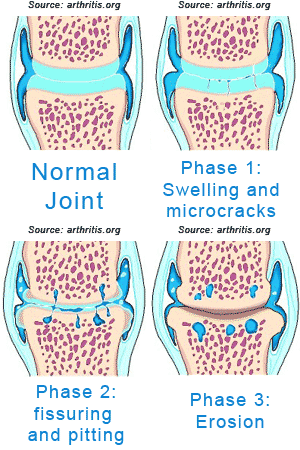
According to the Arthritis Foundation, 21 million Americans have osteoarthritis. It affects middle-aged people as well as seniors. Factors that increase your likelihood of experiencing an osteoarthritic joint are:
According to the Arthritis Foundation, 21 million Americans have osteoarthritis. It affects middle-aged people as well as seniors. Factors that increase your likelihood of experiencing an osteoarthritic joint are:
- Weight – the heavier you are the more likely you will experience OA.
- Trauma – joints that have experienced trauma are more likely to develop OA.
- Infection – if your joint was infected in the past, it is more likely to develop OA.
Treatments
Possible Treatments
- Active Assistive Range of Motion Video
- Aerobic/Endurance Exercise Video
- Core Strengthening Video
- Cryotherapy or Cold Therapy Video
- Electrotherapeutic Modalities
- Gait or Walking Training Video
- Heat Pack Video
- Isometric Exercise Video
- Knee Joint Mobilization Video
- Knee Passive Range of Motion Video
- Knee Resistive Range of Motion Video
- Neuromuscular Electrical Stimulation Video
- Posture Training Video
- Proprioception Exercises Video
- Physical Agents
- Soft Tissue Mobilization Video
- Stretching/Flexibility Exercise Video
Goals
Possible Treatment Goals
- Improve Balance
- Improve ability to bear weight/stand on the leg(s)
- Improve Fitness
- Improve Function
- Optimize Joint Alignment
- Improve Muscle Strength and Power
- Increase Oxygen to Tissues
- Improve Proprioception
- Improve Range of Motion
- Improve Relaxation
- Self-care of Symptoms
- Improve Safety
- Improve Tolerance for Prolonged Activities
Resources
No Referral Required